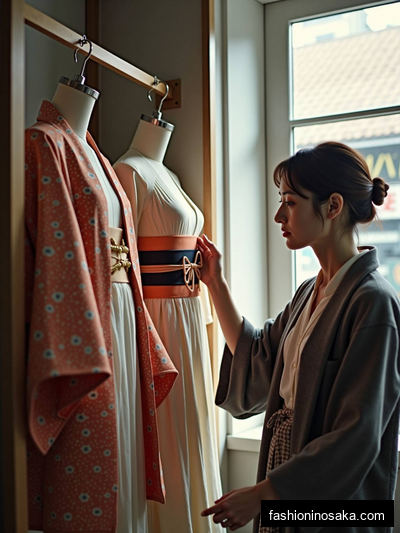

Introduction
The city of Osaka, with its vibrant streets and bustling markets, has become a melting pot of traditional Japanese culture and modern innovation. This fusion is nowhere more apparent than in the realm of fashion, where the elegant simplicity of the kimono meets the daring expressions of contemporary couture. This blend of the old and the new has not only defined Osaka's unique style but has also made significant contributions to the global fashion industry.
In this exploration of fashion's evolution in Osaka, we delve into the intricate dance between tradition and modernity. We will uncover how local designers are reimagining traditional garments for the modern wardrobe, the impact this has on global fashion trends, and what this tells us about the future of apparel. Through interviews with industry experts, analysis of emerging trends, and a look at the historical context, this article offers a comprehensive understanding of how Osaka has become a beacon of fashion innovation.
In this captivating introduction to Osaka, one can immerse in its rich cultural tapestry through iconic landmarks like the majestic Osaka Castle and the serene Sumiyoshi Taisha Shrine. These architectural wonders stand as testaments to the city's enduring heritage.
The Historical Significance of the Kimono in Osaka
The kimono, with its rich history and symbolism, has long been a staple of Japanese culture. Originating in the Heian period (794-1185), the garment has undergone various transformations, reflecting changes in societal norms, aesthetics, and textile technology. In Osaka, the kimono is not just a piece of clothing; it's a narrative of the city's economic, social, and fashion history. The city's role as a merchant hub in the Edo period (1603-1868) facilitated the spread of kimono fashion, making it accessible to the masses and allowing for a rich diversity of styles and fabrics.
Osaka's textile industry played a crucial role in the kimono's evolution, with local innovations in dyeing and weaving techniques contributing to the garment's aesthetic diversity. This historical backdrop sets the stage for understanding the kimono's significance in Osaka's fashion scene and its influence on contemporary designs.
In Osaka, the kimono holds a unique historical significance as it reflects the city's vibrant cultural heritage. From the elaborate designs of Nishijin textiles to the traditional Obi belts crafted by skilled artisans, Osaka's kimono tradition is a testament to the city's craftsmanship and artistry.
Fusion of Tradition and Innovation
In recent years, a new wave of designers in Osaka has been pioneering a movement that bridges the gap between the traditional kimono and modern fashion sensibilities. These creatives are reinterpreting the kimono, preserving its historical essence while infusing it with contemporary flair. This fusion has led to innovative designs that resonate with both local and global audiences, showcasing the versatility and timelessness of traditional Japanese aesthetics.
One notable example is the work of designer Tamao Sasaki, who has gained international recognition for her modern kimono collections. Sasaki's designs maintain the kimono's traditional structure but incorporate modern fabrics, prints, and colors, making the garment more accessible and relevant to today's fashion landscape. Similarly, the brand Wazigen Shizukuya reimagines samurai attire for the modern era, blending historical elements with contemporary functionality.
These designers' efforts have not only revitalized interest in traditional garments but have also contributed to a broader trend of cultural fusion in fashion. By blending the past with the present, they challenge conventional notions of what traditional attire can be, opening up new possibilities for creative expression in the process.
Building upon this innovative trend, the fusion of tradition and technology has become a hallmark of Kyoto's craftsmanship. Artisans are now incorporating ancient techniques like Kintsugi with modern 3D printing methods to create unique, hybrid masterpieces.
Impact on Global Fashion Trends
The fusion of traditional and modern elements in Osaka's fashion scene has had a significant impact on global trends. As designers from Osaka gain international acclaim, elements of Japanese aesthetics are increasingly incorporated into the collections of global fashion houses. This has led to a growing appreciation for minimalism, craftsmanship, and attention to detail—hallmarks of traditional Japanese design.
Furthermore, the trend towards sustainable and ethical fashion has found a natural ally in the principles underlying traditional Japanese garments. The kimono, for example, is designed for longevity, often passed down through generations. This ethos resonates with contemporary concerns about fast fashion and environmental sustainability, making traditional Japanese fashion practices particularly relevant.
The influence of Osaka's fashion fusion can be seen in the collections of international designers like Issey Miyake and Rei Kawakubo, who have been instrumental in introducing Japanese fashion aesthetics to a global audience. Their work exemplifies how traditional Japanese principles can be reinterpreted in a modern context, influencing the global fashion industry's direction.
Furthermore, the rise of sustainable fashion practices, like upcycling and eco-friendly materials, is reshaping global fashion trends. Designers are increasingly prioritizing ethical production methods, influencing consumer choices and pushing the industry towards a more sustainable future.
The Future of Fashion in Osaka
Looking ahead, the fusion of traditional and modern fashion in Osaka is poised to continue evolving. The city's designers are increasingly leveraging technology to push the boundaries of what traditional garments can be. For instance, the use of digital printing techniques on kimono fabrics allows for unprecedented creativity in patterns and colors, while advancements in fabric technology are introducing new levels of comfort and wearability.
Moreover, as global interest in sustainable and ethical fashion grows, Osaka's approach to blending tradition with innovation is gaining wider recognition as a model for the future of the industry. The emphasis on quality, sustainability, and cultural heritage in Osaka's fashion scene offers valuable lessons for designers and consumers worldwide.
Ultimately, the fusion of traditional and modern fashion in Osaka represents a vibrant and evolving dialogue between the past and the present. As this conversation continues, it promises to yield exciting new designs that honor tradition while embracing the future.
As Osaka embraces sustainable fashion practices, eco-friendly materials like organic cotton and recycled polyester are gaining popularity. The future promises a blend of cutting-edge technology with traditional craftsmanship, showcasing the city's unique fashion identity.
Conclusion
In the bustling streets of Osaka, traditional kimonos adorned with modern twists tell a story of a city that reveres its past while boldly striding into the future. The fusion of traditional and modern fashion in Osaka is not just an aesthetic choice; it's a reflection of the city's spirit, characterized by innovation, respect for tradition, and a forward-looking vision. Through the lens of fashion, Osaka offers a compelling example of how cultures can merge to create something truly unique and influential.
For designers, consumers, and fashion enthusiasts worldwide, Osaka's fashion scene provides a source of inspiration and a reminder of the power of cultural exchange. As we look to the future, the continued evolution of this fusion promises to enrich the global fashion landscape, inviting us all to reconsider the possibilities of what fashion can be. Embracing the lessons from Osaka's innovative approach to fashion, the industry can move towards a more sustainable, thoughtful, and inclusive future.
As we reach the conclusion of our exploration through Osaka's vibrant streets, the harmonious blend of tradition and modernity continues to captivate. From the intricate embroidery on kimono sleeves to the innovative use of bold colors, each garment narrates a unique tale of cultural evolution.